House Outline Bundle: An Embroidery Designer’s Review
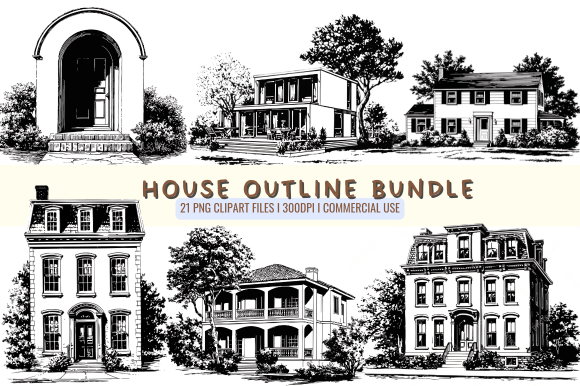
As an embroidery designer who constantly evaluates digital assets for real-world stitching, I approach every new graphic collection with a healthy dose of skepticism. We have all downloaded beautiful illustrations that look stunning on screen but turn into thread nests or unrecognizable blobs once they hit the hoop. When I first opened the House Outline Bundle, my immediate focus was not just on the aesthetic appeal of these 21 PNG clipart files, but on their structural integrity as potential embroidery designs. The black-and-white architectural style suggests a classic, timeless mood, but for those of us running a craft business or creating personalized gifts, the question is always practical: will this actually stitch out cleanly on fabric?
First Impressions and Architectural Clarity
The visual personality of the House Outline Bundle leans heavily into minimalist line art. For an embroidery project, this is often ideal. Unlike complex shaded illustrations that require thousands of fill stitches and high stitch density, outline-based graphics typically translate into running stitches or narrow satin stitches. This lower density is crucial when working with lightweight fabrics or creating baby embroidery where stiffness is undesirable. The clean lines in these graphics provide a strong roadmap for digitizing. As I scrolled through the collection, I noted that the architectural details are distinct without being overly fussy. This clarity is vital because tiny, intricate corners often get lost during the stitching process, especially if you are resizing the design down for a pocket or sleeve cuff.
Real-World Application: Stitching a Custom Tote Bag
To truly evaluate this bundle, I mentally mapped it onto a recent client request for custom apparel and home goods. I recently worked on a series of canvas tote bags intended as closing gifts for a real estate agent. This scenario perfectly tested the viability of the House Outline Bundle. Canvas has a pronounced fabric texture, which can sometimes swallow thin lines. Because these graphics feature bold, confident strokes rather than hairline details, they hold up well against the weave of the canvas.
For this specific handmade product, I envisioned using a single-color thread to maintain that modern, sketch-like aesthetic. The open nature of the design meant I could avoid heavy stabilizer buildup, keeping the tote bag flexible and functional rather than stiff and board-like. If you are an Etsy seller or small shop owner, this type of design is highly efficient. It stitches out quickly compared to dense fill stitch patterns, allowing for faster production times while still delivering a high-perceived value. The architectural theme also lends itself beautifully to tea towels, pillow covers, and nursery decor, making it a versatile asset for various product listings.
Navigating Fabric Challenges and Hoop Sizes
While the House Outline Bundle offers excellent versatility, experienced makers know that placement and substrate matter. These graphics would perform exceptionally well on stable woven fabrics like cotton, linen, and denim. However, caution is required when applying them to stretchy knits or textured terry cloth. On a sweatshirt, for example, the lack of internal structure in an outline design means you must use adequate stabilizer to prevent the fabric from pulling or puckering between stitch points. A cut-away stabilizer is usually necessary here to maintain the geometric precision of the house shapes.
I would also advise testing before committing to dark fabrics. Since these are black-and-white PNGs, they serve as templates. If you plan to stitch them in white thread on navy fabric, ensure the contrast is sharp enough to be visible from a distance. Additionally, consider your hoop size carefully. While the digital files may be large, resizing an outline design too small can cause the machine to struggle with tight angles, leading to thread breaks or poor registration. Conversely, enlarging them significantly for a jacket back might make the running stitch look sparse. Always verify the optimal size range for your specific machine embroidery design software before finalizing your layout.
Critical Checks Before You Digitize or Buy
It is important to clarify a technical distinction for new creative entrepreneurs: the House Outline Bundle consists of PNG clipart files, which are raster images, not pre-digitized embroidery files. This is actually a benefit for designers who want full control over stitch types, direction, and density, but it requires extra work. You cannot simply load a PNG into your embroidery machine. You must either digitize it yourself or hire a professional digitizer to convert these graphics into PES, DST, JEF, or other compatible formats.
Before incorporating these into your commercial embroidery workflow or selling finished products, please observe the following practical notes:
- Verify Licensing: Confirm whether the license permits commercial use for physical items, digital resale, or both. Never assume rights based on category alone.
- Test on Scrap Fabric: Always run a test stitch on the exact material you intend to use for the final product. Check how the lines interact with the grain.
- Evaluate Thread Colors: Even though the source art is monochrome, experiment with variegated or metallic threads to elevate the perceived value of the finished product.
- Check Stitch Density: If digitizing yourself, adjust the density based on fabric weight. Lightweight linens need fewer stitches; heavy denim can handle more.
- Create Printable Mockups: Use the original PNGs to create realistic mockups for your online listings before you even stitch a single sample. This saves time and validates market interest.
- Inspect Small Details: Zoom in at 100% to identify any pixels that might translate to jump stitches or unnecessary trims during the digitizing process.
Enhancing Brand Value Through Timeless Design
In the saturated market of handmade goods and Etsy listings, professionalism sets successful shops apart. The architectural precision found in the House Outline Bundle communicates quality and intentionality. Whether you are creating an embroidered patch for a boutique brand or a personalized gift for a homeowner, the clean aesthetic avoids looking cluttered or dated. This timelessness is key for inventory longevity; unlike trendy seasonal graphics, architectural outlines remain relevant year-round.
Furthermore, having a cohesive set of 21 variations allows for brand consistency across different product lines. You could offer matching tea towels and aprons, or create a "new home" collection featuring different styles from the bundle. This cohesion builds customer trust and recognition. When buyers see that your design assets are thoughtfully curated and executed with technical proficiency, they are more likely to return. Just remember that the success of any digital embroidery file ultimately depends on the maker's understanding of their machine, materials, and the specific requirements of translating pixel-based illustrations into thread-based art. Treat the House Outline Bundle as a premium foundation, apply your technical expertise, and the resulting projects should reflect the same classic quality as the source art.