Lighthouse Line Art Graphics: Illustrations Review
Evaluating Hand-Drawn Vectors for Coastal Branding Projects
When reviewing a new graphic design asset for a client project, my primary concern is always versatility versus aesthetic specificity. Recently, I evaluated the Lighthouse Line Art Svg Png Eps Bundle while developing a comprehensive visual identity for a boutique coastal candle company. The client needed a look that felt artisanal and nautical without veering into cliché tourist-shop territory. My first impression of this collection was that it successfully bridges the gap between vintage maritime nostalgia and clean, modern line work. The hand-drawn quality provides an organic texture that stock vectors often lack, making these illustrations feel bespoke rather than mass-produced. For designers working with handmade businesses or lifestyle brands, this specific mood is crucial for establishing immediate emotional resonance with an audience seeking authenticity.
Vector Integrity and File Format Performance
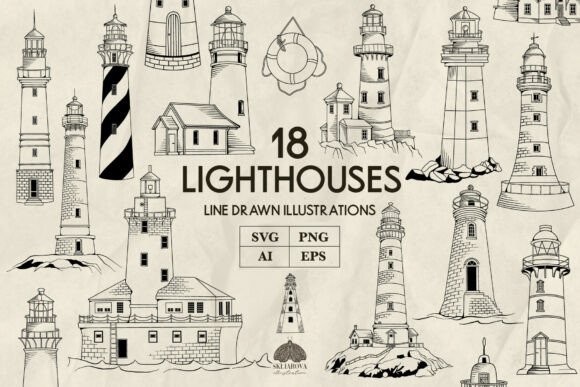
As a professional designer, technical specifications dictate workflow efficiency. This set includes 18 hand drawn vector line illustrations of lighthouses in SVG, AI, EPS, and PNG formats. In my testing, the AI and EPS files demonstrated true vector integrity. I scaled several designs up to poster size for a pop-up shop banner and down to one inch for product labels, confirming they can be reduced or enlarged without loss of quality. Crucially, the anchor points were clean enough that I could change the color to match the client’s specific Pantone palette within seconds. The included PNGs offer high-resolution transparency, which proved invaluable for quick mockups in Canva templates before finalizing the professional artwork in Illustrator. Having both editable vectors and ready-to-use raster files makes this design bundle highly functional for mixed-workflow environments where speed and precision are equally important.
Application in Packaging and Product Label Design
The true test of any commercial design asset is how it performs on physical goods. For the candle project, I utilized three different lighthouse variations across a product line. The line weight was consistent enough to maintain legibility when printed on textured kraft paper labels, yet delicate enough to serve as an elegant background pattern on the outer packaging box. These graphics excel in packaging design because the open line art style allows the substrate color to show through, creating depth without heavy ink coverage. For print-on-demand sellers or Etsy product creators, this characteristic reduces printing costs while elevating perceived value. The illustrations act as sophisticated decorative accents that frame typography beautifully, supporting the brand narrative without competing with essential product information or regulatory text.
Digital Adaptability for Social Media and Web Graphics
Beyond print, modern brand identity requires digital flexibility. I integrated these lighthouse graphics into Instagram carousel posts and Pinterest pins to test their screen performance. The SVG format rendered crisply on high-DPI displays, ensuring the hand-drawn charm wasn't lost to pixelation. For web design, these assets function excellently as hero graphics or section dividers that break up text-heavy editorial content. However, designers should note that these work best as supporting visual elements rather than standalone focal points in complex UI layouts. When used in social media graphics, the line art provides a cohesive visual thread that ties together disparate content types, from promotional ads to educational blog visuals. This consistency helps build recognition and trust across digital touchpoints, which is vital for small business branding efforts.
Crafting Merchandise and Cricut Project Assets
For makers and crafters, the utility of this digital product extends into physical fabrication. I tested the SVG files specifically for Cricut projects and sublimation design. The paths are well-organized, minimizing weeding time for vinyl sticker design and t-shirt design applications. Unlike some clipart that requires extensive cleanup, these vectors cut cleanly on cardstock and heat transfer vinyl. The 18 unique variations allow for themed collections, such as a series of tote bags or mugs featuring different regional lighthouse styles. This variety supports creative marketplace sellers who need to offer diverse products under a unified aesthetic umbrella. The hand-drawn nature of the lines also forgives minor cutting imperfections better than rigid geometric vectors, making them forgiving for beginners while remaining professional enough for established craft businesses.
Navigating Visual Hierarchy and Layout Constraints
While versatile, this asset requires thoughtful placement to maintain effective visual hierarchy. These illustrations perform exceptionally well in large layout areas, hero sections, and as border elements. However, they should be used carefully in crowded layouts or at extremely small sizes where intricate line details might merge or disappear. In minimalist branding or strict corporate materials, the organic hand-drawn style may clash with rigid grid systems unless intentionally juxtaposed for contrast. Designers must also consider contrast ratios; thin lines can vanish against busy photographic backgrounds or low-contrast color combinations. I recommend using these graphics as primary visuals only when the surrounding space is ample. When used as secondary accents, they enhance readability and engagement by guiding the eye without overwhelming the core message. Understanding these spatial relationships ensures the asset enhances professionalism rather than detracting from clarity.
Essential Pre-Flight Checks for Commercial Use
Before deploying any creative design asset in a paid project, rigorous quality assurance is non-negotiable. Based on my review, here are practical notes for designers considering this bundle:
- Test in Black and White: Ensure the illustration holds its form and recognizability without relying on color differentiation.
- Verify Contrast: Check visibility on both light and dark backgrounds, especially for merchandise like navy t-shirts or white ceramics.
- Scale Testing: Preview at actual print size and maximum digital display size to confirm line weight appropriateness.
- Mockup Validation: Always place on real product mockups before finalizing; screen rendering differs significantly from physical output.
- Typography Pairing: Test alongside serif, sans serif, script, and handwritten fonts to find the optimal stylistic balance for your specific brand voice.
- File Inspection: Open SVG and EPS files to check for stray points or unclosed paths that could cause production issues.
- Licensing Confirmation: Always review the commercial license terms to ensure compliance for client work, POD sales, or digital redistribution.
Strategic Value for Professional Design Workflows
Ultimately, the Lighthouse Line Art Svg Png Eps Bundle represents a solid investment for designers serving niche markets. It solves the common problem of finding nautical graphics that feel curated rather than generic. Whether you are building a logo design concept, creating marketing visuals for a seasonal campaign, or producing printable wall art, this collection offers sufficient variety and technical quality to support professional outcomes. The ability to customize colors and scale infinitely ensures longevity across multiple client projects. For small business owners and content creators, it provides an accessible entry point to elevated visual storytelling. By understanding both its strengths in atmospheric branding and its limitations in dense layouts, designers can leverage this asset to create work that feels both commercially viable and artistically genuine. It is a reliable tool in the modern designer's arsenal for projects demanding warmth, heritage, and coastal sophistication.