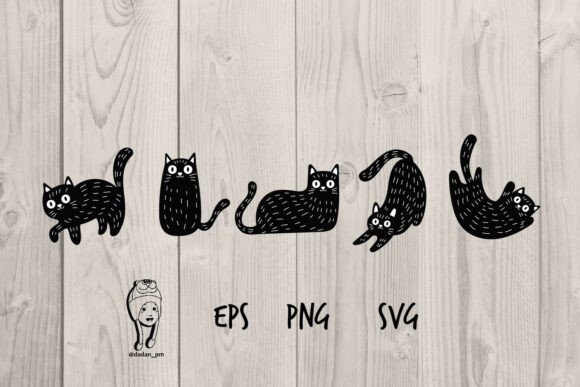
Collection of Hand-drawn Black Cat: A Stitcher’s Review
As an embroidery designer who has digitized and stitched out countless graphics, I approach every new asset with a critical eye. When evaluating the Collection of Hand-drawn Black Cat, my first thought isn't just about how cute the artwork is on a screen; it is about how those lines will translate into thread on fabric. This collection offers a distinct aesthetic that leans toward organic, sketchy charm rather than rigid, cartoonish perfection. For makers and small business owners, this distinction matters immensely. The hand-drawn nature of these illustrations suggests a mood that is cozy, vintage, and authentically handmade, making them ideal for creators looking to add personality to their product lines.
Translating Vector Lines to Real-World Stitches
The immediate advantage of receiving high-quality SVG, EPS, and PNG files is the clarity of the source art. In my review process, I zoomed in to inspect the line weight and detail density. For a machine embroidery design, clean vectors are non-negotiable. Jagged pixelation in a preview often results in messy auto-digitizing or confusing stitch paths. Fortunately, the higher resolution mentioned in the product description holds up under scrutiny. The lines in this Collection of Hand-drawn Black Cat possess a natural variation that mimics ink on paper. When converting this to an embroidery file, you have two excellent options depending on your end goal.
If you are aiming for a delicate, artistic look, these graphics serve as perfect guides for a running stitch or redwork style. The irregularities in the hand-drawn lines prevent the embroidery from looking too industrial. Conversely, if you plan to use these as an applique design, the bold silhouettes provide clear boundary markers for placement stitches. I particularly appreciate that the visual personality here feels intentional. It doesn’t look like generic clip art; it looks like something sketched by an artist, which adds significant perceived value to any handmade product you create.
Project Spotlight: The Custom Canvas Tote Bag
To truly test the viability of these graphics, I mentally walked through a specific real-life scenario: creating a signature tote bag design for a fall boutique collection. Tote bags are a staple for Etsy sellers and craft fair vendors because they offer a large, flat canvas that showcases detail well. For this project, I envisioned using the black cat illustration in a monochrome palette against unbleached natural canvas.
In this application, the Collection of Hand-drawn Black Cat shines because of its contrast. Black thread on natural fabric creates a striking, legible image even from a distance. Because tote bags are functional items subject to wear, I would recommend using a dense fill stitch for the body of the cat if doing a solid version, or a heavier weight thread for outline work to ensure durability. The hand-drawn aesthetic pairs beautifully with the rustic texture of canvas, reinforcing the "slow fashion" or "cottagecore" vibe that customers currently seek. This isn't just a graphic; it is a branding element that tells your customer they are buying something crafted with intention, not mass-produced.
Navigating Fabric Textures and Hoop Constraints
While these illustrations are versatile, practical judgment dictates where they should be used with caution. Not all fabric texture is created equal, and hand-drawn details can get lost on highly textured surfaces. If you are planning sweatshirt embroidery on heavy fleece or terry cloth, the finer nuances of the sketch might disappear. In these cases, you must adjust your stitch density or simplify the design elements to maintain clarity. Always test on a scrap of the exact garment material before committing to a full production run.
Hoop size is another critical factor. These graphics likely vary in aspect ratio. Before purchasing or stitching, verify the dimensions against your machine’s capabilities. A design that looks spacious in a 5x7 hoop might feel cramped or require excessive resizing that distorts the hand-drawn proportions. Additionally, be mindful when working with stretchy fabrics like jersey knits for baby embroidery or t-shirts. The organic lines of this collection require stable registration. Without proper stabilizer and hooping technique, the sketch effect could turn into a wobbly mess, undermining the professional finish your customers expect.
Commercial Viability for Makers and Sellers
For the craft business owner, time is money, and assets need to be efficient. The inclusion of multiple file formats makes this collection a robust toolkit for digital product sellers as well. Beyond physical embroidery, the high-resolution PNGs and scalable SVGs are excellent for creating printable mockups or listing photos. Being able to show a potential buyer exactly what the finished product will look like builds trust and reduces return rates.
However, always confirm licensing terms before integrating these into your commercial workflow. Whether you are selling custom apparel, personalized gifts, or embroidered patches, understanding your rights protects your business. Assuming these are cleared for commercial use, the versatility allows for cohesive branding across different mediums. You could use the same cat motif on a nursery pillow cover, a holiday tea towel, and a shop logo, creating a recognizable brand identity that ties your physical and digital offerings together.
Essential Designer Notes for Best Results
Based on my experience reviewing similar design assets, here are my practical recommendations for getting the most out of this collection:
- Test Stitch First: Never assume a digital file is stitch-ready without verification. Run a test on scrap fabric to check for gaps, pull compensation issues, or overly dense areas that might pucker lightweight materials.
- Contrast Check: View the design in black and white before selecting thread colors. Hand-drawn shading sometimes relies on color gradients that don't translate to solid thread. Ensure the silhouette reads clearly in monochrome.
- Stabilizer Selection: Match your stabilizer to the fabric weight. For the delicate lines in this Collection of Hand-drawn Black Cat, a tear-away might suffice for canvas, but a cut-away is safer for knits to prevent distortion over time.
- Mockup Validation: Use the provided high-res files to create realistic previews. If selling digital embroidery files, show the design on both light and dark backgrounds so buyers understand its versatility.
- Detail Inspection: Zoom in to 100% on the vector files. If lines are thinner than 1mm, consider thickening them slightly during digitizing to prevent needle breaks or skipped stitches on home machines.
Final Thoughts on Artistic Integrity
Ultimately, the Collection of Hand-drawn Black Cat succeeds because it respects the medium. It understands that embroidery is a tactile art form that benefits from imperfection and warmth. For the Etsy seller looking to differentiate their shop from AI-generated saturation, or the hobbyist wanting to stitch something with genuine character, this collection offers a solid foundation. Just remember that the file is only the starting point. Your expertise in hooping, stabilizing, and color selection is what transforms these digital illustrations into a cherished personalized gift or a best-selling boutique item. Approach the digitizing process with patience, respect the hand-drawn origin, and your finished stitches will carry that same artistic soul.